Dr Paul Wilkinson of the British Geological Survey describes how CLARET, an industry-led research project, is developing subsurface imaging technology to monitor contaminant conditions before, during and after remediation.
The CLARET project (Contaminated Land: Assessment of Remediation by Electrical Tomography) is developing geoelectrical imaging as a minimally invasive tool to monitor contaminated land and validate remediation processes.
The project is funded by a grant from the Technology Strategy Board with contributions from a consortium partnership. It is led by brownfield regeneration specialists VHE Construction plc (VHE), with research directed by the British Geological Survey (BGS). The project partners are Interkonsult Ltd (IKL), an innovative engineering consultancy, and site owner South Kesteven District Council (SKDC), which provides a regulator's perspective.
The concept
Geoelectrical tomography produces images of the subsurface in much the same way that CAT or MRI scanners image the interior of the human body. It is a minimally invasive technique that uses metal electrodes inserted into the ground, either at the surface or in boreholes. These measure the electrical resistivity of the Earth.
This physical property depends on the geology, the quality of the groundwater, and the presence of contaminants and their breakdown products. The measurements are turned into 3D volumetric images of the subsurface. Since the geology is static, the monitoring of differences in the images over time highlights changes in contamination or in the quality of the groundwater.
A key advantage of this approach over traditional intrusive sampling is that the volumetric images provide information between point samples and extra assurance that contamination has not been missed.
The aims of CLARET include the development of a remotely controlled automated electrical imaging system, which can automatically image the subsurface and transmit the data back to the office without the need for repeated site visits or manual intervention. The system is being tested at a contaminated land site to demonstrate its ability to monitor and validate remediation processes.
The test site
In the historic market town of Stamford, Lincolnshire, the site of the former gasworks has been in use as a municipal car park since 1972. The site, known as Wharf Road car park, was declared as statutorily contaminated land in February 2005 under Part 2A of the Environmental Protection Act 1990.
After extensive site investigations, several significant linkages were identified between an underlying minor aquifer and a range of pollutants including PAHs, BTEX compounds, petrol range organics, ammoniacal nitrogen, sulphates and cyanides.
Remediation
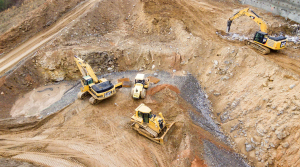
VHE began remedial works on the Wharf Road site in April 2007. The primary treatment for the grossly contaminated hotspots was excavation and removal of the soil to licensed landfill sites. Other excavated soils were treated on site by ex-situ bioremediation to enable their re-use on site. The excavations were validated by analysing soil samples taken from the sides and bases to demonstrate that contaminant concentrations were below target values that were agreed with SKDC and the Environment Agency in accordance with CLR11.
All of the identified hotspots were removed to landfill or treated by bioremediation to ensure the site soils were below the agreed remediation criteria. The excavations were infilled with clean processed granular materials obtained from re-grading the car park.
Finally, groundwater monitoring was carried out during and after remediation to demonstrate that the concentration of contaminants in the groundwater had decreased. Whilst the soil and groundwater sampling were undertaken to ensure that the land was no longer statutorily contaminated, the results are also being used to help interpret the data and images from the CLARET test system.
System installation
BGS installed the CLARET system after the excavated hotspots had been infilled and before the car park surface was reinstated. The electrode network was designed to monitor the boundaries with the River Welland to the south and privately owned land to the east. It consists of 14 vertical arrays, each with 16 electrodes spaced at half-metre depth intervals, and each installed in a purpose-drilled borehole.
Bentonite was used to surround the electrodes and close the boreholes, providing good electrical contact with the formation whilst preventing the creation of new pollution pathways. This arrangement allows the system to measure the resistivity at various locations and depths along the boundaries.
The system is powered by batteries charged from a mains supply (although solar and wind turbine options are also possible), and communications with the office are provided by a 3G wireless internet connection. The system has little visual impact, the only evidence being a standard equipment enclosure adjacent to the site and several inspection covers. There is no impact on the use of the site as a car park.
Results so far
Since the source zones were excavated during the remediation programme, the focus of the project has been on validation and post-remediation monitoring. An example 3D resistivity image of the Wharf Road subsurface is shown in context beneath the aerial photo of the site.
The geology is visible as layers of different colours, with reds and yellows indicating unsaturated made ground or poorly conducting material such as the gravel of the minor aquifer. By contrast, the green and blue colours show layers with good electrical conductivity such as alluvium, clay and mudstone.
But it is the changes in the images over time that are fundamental to the CLARET concept. Over a period of nine months there has been no geoelectrical evidence of any movement of residual contamination or plumes of breakdown products occurring across the site boundaries.
A more detailed analysis of the geoelectrical properties of the aquifer has shown that its formation resistivity has increased steadily over time. Assuming the absence of bulk NAPL, a reduction in dissolved contaminants will increase the resistivity of the pore-water and hence of the formation. The analysis therefore strongly suggests that the groundwater has become less contaminated since the site was remediated.
The future
Monitoring of the Wharf Road test site will continue for a least another year. During this time, we hope to use a saline tracer to simulate a pollution plume and image its movement across the electrode array. Whilst we have already shown that this is possible in the laboratory, a field demonstration will highlight the ability of CLARET to improve the understanding of pollution pathways at a site.
VHE is to continue working with the project partners to explore the broad range of potential applications of CLARET. Almost any contaminants that affect the bulk conductivity of the subsurface or are themselves, as free products, either very electrically conductive or resistive, could be monitored by this technology. The actual remediation process used is not critical and any timescale from days to months could be employed.
A particularly exciting possibility would be to monitor the in-situ remediation of source zones and any associated plumes or haloes of breakdown products. Although CLARET is unlikely to fully replace traditional verification methods, it has the potential to reduce the amount of conventional sampling that is required whilst providing complementary information to assess the effectiveness of remediation programmes.
This will reduce costs, save time, mitigate the risk of creating new pollution pathways, and provide continuous, long-term post-remediation monitoring at a fraction of the cost of manual sampling. IKL are currently undertaking a detailed cost-benefit analysis, but it is anticipated that a typical CLARET installation would cost around £45k to install with operating costs of £5k per year.
Dr Paul Wilkinson, Senior Geophysicist. British Geological Survey